
Post- Construction Deep Cleaning

The stage that turns construction site into completed project.

What is a post-construction deep clean?

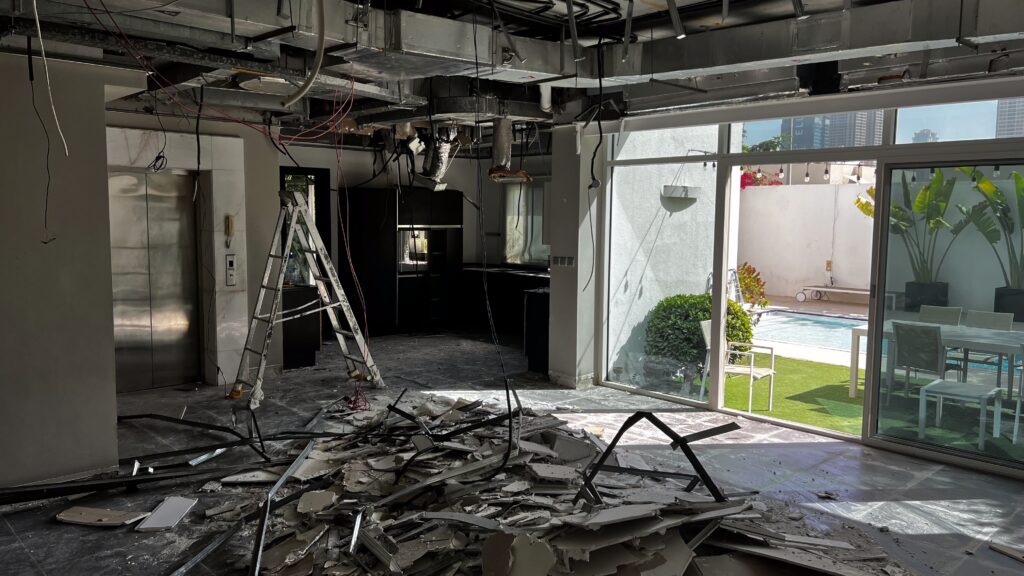
A Post-Construction Deep Clean is the final stage in completing a build: the point at which the structure stands finished, yet still carries the imprint of the processes that formed it. Cement films settle across tiles and stone, plaster dust rests within joints and corners, grout haze softens surfaces, and silicone or adhesive traces remain around installations. Even a well-run project holds these final marks of construction.

This stage removes them with controlled, technical cleaning designed specifically for newly built environments. As the residues lift, the architecture becomes legible – lines sharpen, materials show their intended finish, and the space begins to speak in the language of design rather than labour. It is the moment the project reveals its true character.

A Post-Construction Deep Clean prepares each area for meaningful evaluation: engineers see what has been executed, clients understand what they are receiving, consultants can assess without obstruction, and the space becomes ready for documentation, leasing, or handover.

It is where a site stops being a site and becomes a completed environment.

When do you need to schedule a post-construction deep clean?

A Post-Construction Deep Clean should be planned as a project approaches its closing stages, when:

  • Major trades have finished.
  • Fixtures, ceilings, partitions, and flooring are in place.
  • Access is safe and unobstructed.
  • Deadlines for viewing, inspection, photography, or occupation are confirmed.

Planning it early avoids congestion, prevents re-contamination, and aligns the cleaning with the natural rhythm of the build. A project that ends in order presents in order.

Why do you need a post-construction deep clean?

Because construction, by its nature, conceals its own results. Cement haze obscures stone, plaster dust dulls finishes, grout residue distorts colour, and silicone or adhesive marks interrupt clean sightlines. Until these final remnants are removed, the project cannot be seen as it truly is by developers, consultants, engineers, or clients.

A Post-Construction Deep Clean matters because it:

Reveals workmanship without obstruction.

Restores clarity to glazing, flooring, metalwork, and joinery

Allows consultants to evaluate the build accurately.

Presents the space as a finished product rather than a recently active site.

Supports confident handovers, marketing, and operational takeover.

Completes the project to the highest standards.
Where do we deliver post-construction deep cleaning?

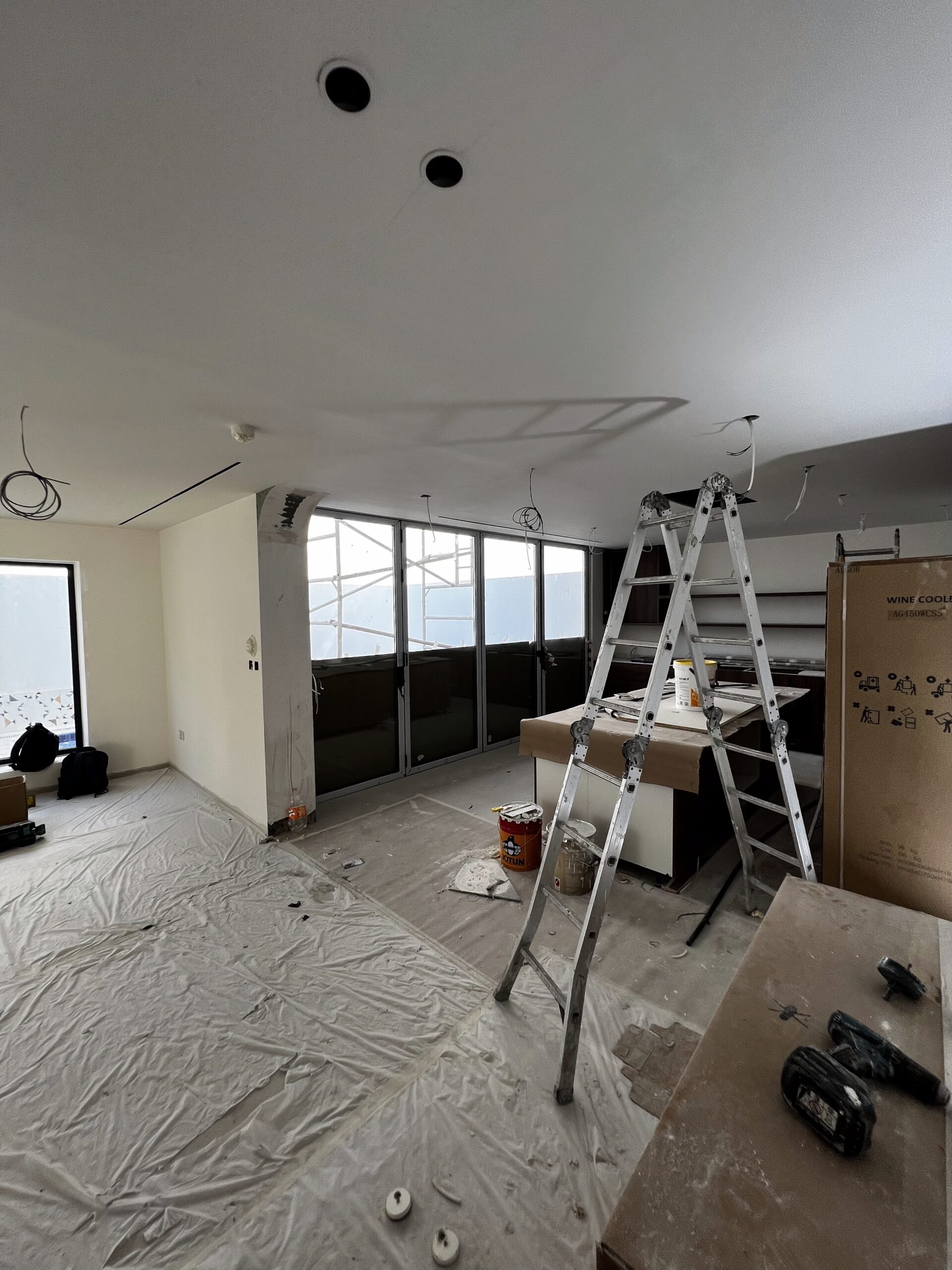
We operate across Dubai, supporting projects as soon as construction or renovation is complete. Whether it’s towers, office floors, warehouses, villas, or retail units, the expectation remains the same: a clean, prepared space ready to be viewed with confidence.

We routinely carry out Post-Construction Deep Cleaning in:

How we deliver a post
construction deep clean

The building is reviewed to confirm readiness. Access, conditions, remaining activity, and project priorities are assessed so the cleaning begins from a position of clarity.

A good clean is earned before it starts.

Management meet to determine the most effective sequence for the building. Teams, timings, and zones are set with precision so progress is steady, efficient, and aligned with both SOPs and the client’s programme.

It is the stage where order is designed before it is delivered.

The hard-clean team remove the physical traces of construction — cement residue, plaster remnants, grout haze, adhesive and silicone marks, paint overspray and accumulated debris.

Their work transforms each area from a trades environment into a clean foundation on which the finer stages can hold.

This stage gives the project its first moment of clarity.

A slower, more controlled stage focused on precision. The soft-clean team remove the fine settlement left after heavy works the dust that settles across ledges, glazing, partitions, exposed systems, metalwork and joinery.

As they work, the space begins to read as a finished environment rather than an active site.

Detailing addresses the areas that separate acceptable from correct: junctions, framing systems, transitions, high-level ledges, touch-points and the structural lines where dust naturally gathers.

Where furniture or fixtures are installed before completion, detailing continues around them careful dusting, light polishing, and final adjustments so the space presents without distraction.

This is the stage where experience is visible.

Completed areas are reviewed, verified, and recorded before release.
This stage prevents surprises at inspection and ensures the presentation aligns with the standards expected at the close of a project.

A project may be built well, sign-off ensures it is received well.

Enquiry form